
.jpg)
Close

Read Time: 8 Minutes
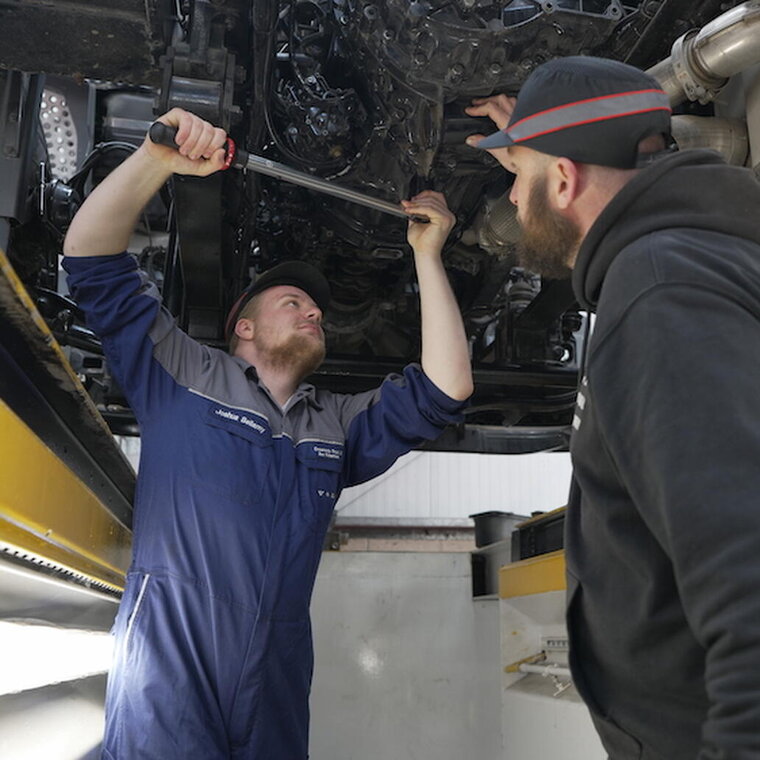
Walk into any dealership, workshop or fleet operation and you can usually spot the technicians, the sales team and the service advisors right away. Parts? They are often tucked away behind a counter or in a busy storeroom, quietly holding the whole operation together. Parts teams might not always be visible, but the work they do keeps workshops productive, customers happy and businesses profitable.
That is why employers across Scotland and Wales are starting to look again at Parts Apprenticeships. The industry is moving quickly, and the need for skilled parts professionals is rising just as fast. Without a pipeline of well-trained advisors, aftersales performance becomes harder to maintain and even harder to grow.
So let’s take a clear look at why Parts Apprentices are becoming absolutely essential for the future of the automotive industry, and why choosing the right training partner makes all the difference.
Parts departments rarely get the spotlight, yet almost every customer outcome relies on them. A technician can only work efficiently when the correct part arrives at the right time. Service advisors can only deliver on their promises when the parts team is on top of stock, ordering and availability. Managers can only plan revenue when they know their parts operation is solid and dependable.
It is easy to underestimate how much coordination sits behind this. From technical knowledge to supplier relationships to the rhythm of stock control, parts professionals keep the entire aftersales ecosystem moving. If one element slows down, everything else follows. For many employers in Scotland and Wales, that pressure is increasing as demand for accurate parts supply grows.
That is where a strong apprenticeship pipeline becomes essential.
Modern vehicles are becoming more advanced by the month. Diagnostics systems, ADAS features, EV components and complex electronics mean that identifying the right part now requires deeper knowledge and more confidence than ever.
The role of the parts advisor has expanded. It used to focus mostly on order processing and customer service. Today, the job brings together technical insight, digital systems, data skills and an understanding of how vehicles operate as complete systems. Advisors must interpret VIN information, navigate online catalogues, spot potential errors before they affect workshop time and support technicians who may be working on unfamiliar technologies.
This shift means employers cannot rely solely on legacy experience or old ways of working. They need people who are trained for the world we have now, not the world we had ten years ago. A strong Parts Apprenticeship builds these modern capabilities from day one.
is the estimated market size of the UK’s motor vehicle parts wholesaling sector, which supplies parts to workshops and retailers nationwide.
businesses roughly in the UK 'Motor Vehicle Parts & Accessories Manufacturing' sector
Many employers in Scotland and Wales say the same thing. Recruitment for experienced parts advisors is harder than it used to be. There simply are not enough people with the right knowledge and the right level of commercial awareness to step straight into the role.
Several factors are driving this shortage:
This skills gap means employers often compete for the same small pool of experienced advisors. That pushes up recruitment time and costs. It can also slow down workshop productivity if the team is stretched too thin.
A Parts Apprentice gives employers a different option. Instead of waiting for experience to appear on the market, businesses can build it themselves.
One of the biggest misconceptions is that a parts apprenticeship covers only stock and ordering. The reality is much broader.
A modern automotive parts apprenticeship gives learners skills in the areas that truly matter for a high-performing aftersales operation. These include:
This blend of technical understanding and commercial awareness helps apprentices contribute to the operation much earlier than most employers expect. With the right training provider, they learn in a structured, supportive environment that links directly to real-world tasks.
At our organisation, we focus on human-centred training. That means apprentices not only build technical competency but also the confidence, communication skills and mindset needed for long-term careers.
Employers often ask what the immediate return looks like. The truth is that parts apprenticeships deliver real value, and they deliver it sooner than many businesses think.
Here are some of the practical benefits:
Higher Workshop Productivity
When stock is organised, orders are accurate and potential delays are spotted early, technicians can stay on the tools for longer. Productivity rises because parts supply becomes proactive rather than reactive.
Better Customer Experience
Accurate information, faster turnaround and fewer surprises create trust. Parts teams play a major role in shaping that experience.
Reduced Recruitment Costs
Instead of repeatedly hiring experienced advisors from a shrinking pool, employers can develop loyal team members who grow with the organisation.
Better Alignment Across Aftersales
Apprentices who train within your culture understand your systems, expectations and customer base from the start.
Long-term Workforce Sustainability
Structured training builds a reliable pipeline of future senior advisors and parts managers. This is essential as the experienced workforce continues to change and retire.
million vehicles - that was the number of licensed zero-emission vehicles on UK roads by the end of 2024, showing growing demand for parts and servicing across EVs as well as conventional cars.
million vehicles were licensed on UK roads at the end of 2024, highlighting the sheer scale of the national vehicle parc and the ongoing demand for parts and maintenance.
Alongside the operational and financial advantages, apprentices also bring value in ways that are sometimes missed.
Fresh Energy and Curiosity
Apprentices tend to ask smart questions that highlight where a process could be simpler or more efficient. These are the kinds of improvements that experienced teams sometimes overlook.
Better Team Morale
Mentoring apprentices gives existing staff a chance to share their knowledge. For many senior parts professionals, this creates a sense of pride and purpose.
Digital Confidence
Younger apprentices often take naturally to new systems and software. As more suppliers and manufacturers move online, this digital confidence becomes a real asset.
Loyalty and Retention
People who start their career with supported training are far more likely to stay with an employer long term. This stability is invaluable for an aftersales department.
The shift to electrification may feel gradual in some regions, but its impact on parts operations is huge. EVs come with new components, different service intervals and an evolving supply chain. Advisors must understand how these vehicles work, how parts interact and how sourcing differs from traditional ICE vehicles.
Without this knowledge, even simple tasks can cause delays. Ordering the wrong component for a high-voltage system, for example, can lead to costly rework and lost workshop hours.
This is why EV parts knowledge is built into modern apprenticeships. We ensure apprentices develop the confidence to work with advanced technologies, identify the correct components and support technicians working on these systems.
As the EV parc grows across Scotland and Wales, this skill set will become essential for every parts team.
Automotive aftersales is evolving quickly. Customer expectations are rising. Digital systems are taking greater control. EV and hybrid technology is reshaping workshop workflows.
Apprentices often see opportunities that others may miss. They understand how customers think today. They approach digital tools more instinctively. They bring fresh energy to teams that have operated in similar ways for many years.
Some of the most successful aftersales operations actively blend experienced parts professionals with new apprentices. This combination creates a team that is both knowledgeable and adaptable. It builds resilience and innovation into the operation, which is essential for the future of automotive aftersales.
million vehicles were on UK roads in 2024, a record high that continues to drive huge demand for servicing, repairs and replacement parts.
years is now the average age of a car in the UK. The highest on record, with more than 40% of vehicles aged over 10 years, driving sustained demand for replacement parts.
Not all apprenticeship programmes are equal. Employers need a partner that understands modern vehicle technology, aftersales requirements and the realities of running a busy parts department.
Working with us means employers gain support that is structured, consistent and aligned with the challenges they face. Our programmes combine industry expertise with a human-centred approach that builds confidence as well as competence. Apprentices learn from specialist skills coaches who understand real-world parts operations, not just theory.
Employers also get clear visibility of apprentice progress, regular communication and guidance to help the apprentice grow into a valuable long-term team member. When training is done well, apprentices integrate smoothly into the business and develop the skills needed to thrive in an evolving industry.
Everything leads back to the parts team. Workshop performance, customer satisfaction, profitability and long-term business stability all rely on getting parts supply right. As the industry continues to change, employers will need people who understand both the technical and commercial realities of modern automotive service.
Parts apprenticeships are becoming one of the most important tools employers have for tackling the automotive skills gap and preparing for the future.
For employers across Scotland and Wales, building a strong pipeline of well-trained, forward-thinking parts professionals is not just good planning. It is vital for staying competitive.
If you want your aftersales operation to thrive in the coming years, start with the team that keeps everything moving. Start with parts. And when you do, choosing the right training partner will make all the difference.